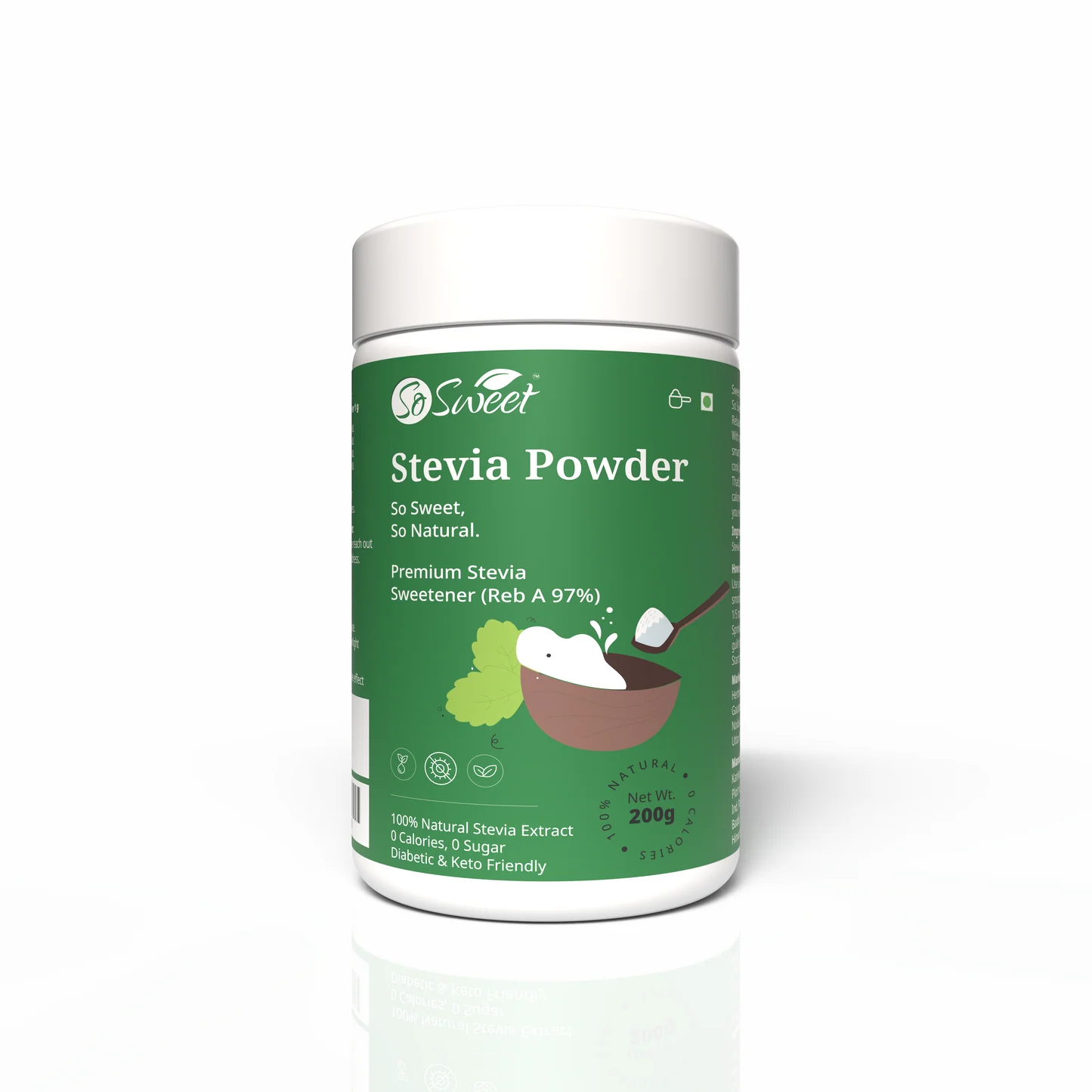
Stevia and Sweeteners in Pakistan
Plant derived stevia sweetener for cutting sugar, with honest guidance and no medical claims.
Stevia is the plant derived sweetener that has quietly entered Pakistani kitchens as families look to reduce sugar without giving up sweet chai. It tastes many times sweeter than sugar per spoon, dissolves easily in hot drinks, and a small pack lasts a surprisingly long time. This page covers the basics honestly, with no medical claims and no hype.
What Stevia Is and Is Not
Stevia is extracted from the leaves of the stevia plant and has been used as a sweetener for decades worldwide. It is not sugar, it does not caramelise like sugar in cooking, and it has a slightly different taste profile that most people adjust to within a week. What it is: a way to sweeten drinks and desserts with far less quantity than sugar. What it is not: a medicine, a treatment, or a product we make any health claims about. If you have diabetes or any medical condition, talk to your doctor before changing your diet; we are a grocery store, not a clinic, and we keep it that way.
Using It in Pakistani Kitchens
Start with half the sweetness you think you need; overdoing stevia is the classic beginner mistake and causes the bitter aftertaste people complain about. In doodh patti and chai, add it at the same stage you would add sugar and stir well. In desserts, it works best in cold or gently heated preparations rather than high heat baking, where sugar's structural role matters. A small pack typically lasts a single user several weeks because the per serving quantity is tiny compared with sugar spoonfuls. Keep it dry and sealed, like any fine powder in our humidity.
Buying Stevia in Pakistan
The local market mixes genuine imported stevia with repacked powder of uncertain origin, so buy from sellers who show the sealed branded pack with a printed expiry date and a readable batch code. Our current listing's brand is being finalised and the PKR 950 price is an estimate pending shipment confirmation; pre-orders are honoured at the listed price either way. Avoid loose powder sold without labelling, because you cannot verify what is actually in it. As with everything we sell, the pack you receive is factory sealed with a printed expiry date, and anything less is not something we would ship.
Who It Suits
Stevia suits households cutting sugar gradually, people who take several sweet chais a day and want to reduce the load, and anyone curious about alternatives without committing to a lifestyle overhaul. It suits less those who bake extensively with sugar chemistry, and children, for whom simply reducing overall sweetness is the better approach. Try a small pack first, give your palate a week, and decide on taste rather than claims. That is the honest way to shop for any sweetener.
Stevia Forms: Powder, Drops and Sachets
Stevia comes in several formats, and the right one depends on your routine. Loose powder suits home kitchens where you sweeten chai by the pot and want precise control. Single serve sachets fit office bags and handbags for chai at work or on the go. Liquid drops dissolve instantly in cold drinks and give the finest dose control, drop by drop. Whichever form you choose, check that the ingredient panel lists stevia extract clearly and that the pack is factory sealed with a printed expiry date. Avoid unlabelled loose powder from market stalls, because without labelling you cannot verify what sweetener you are actually buying, or what it is cut with.
When you are ready to buy, compare the cost per serving rather than the pack price; because stevia is so much sweeter than sugar, the cheapest pack is not always the cheapest month.